
Organizational Culture Mapping
What is Culture Mapping
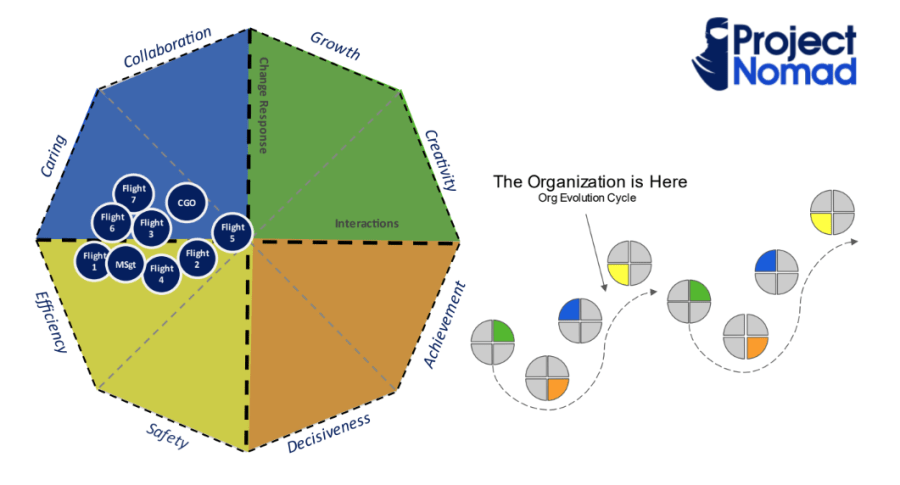
Culture Mapping consists of small-group sensing sessions or focus groups, repeated until the organization’s statistically representative sample size is reached. Participants in each session come from the same unit, workplace, and rank tier, ensuring context-rich insights into organizational strengths and challenges. This methodology enables the final report to provide detailed, team-specific insights into why organizational practices, processes, procedures, policies, and rituals are perceived as effective or ineffective—giving leaders the context needed to drive organizational change and development initiatives.
Logistical Requirements
Culture Mapping is not a quick process. The logistical effort is significantly greater than running a survey, but the insights gained are far more nuanced and actionable. Most organizations with 300 or fewer members require approximately 35 days to train facilitators and schedule participants, followed by four days to complete all 2-hour sessions. Because each session is limited to 3–10 participants from the same team, office, and rank tier, scheduling is labor-intensive.
Statistically Representative Sample by Unit Size
- 50-members or less = 72%
- 75-members = 63%
- 100-members = 56%
- 150-members = 45%
- 200-members = 39%
- 250-members = 33%
- 300-members or more = 30%

Culture Mapping Planning
Timeline
- D-35: Project Nomad receives notification of the Culture Mapping initiative approval, with a start date set for at least 35 days from notification.
- D-32: The assigned point of contact meets with the Project Nomad team to review Parts 1–3 of the Culture Mapping scheduling checklists.
- D-30: The leader or designated point of contact completes the Mission and Design Questionnaire at least 30 days before the Culture Mapping sessions. If participating in Organizational Network Analysis, the organization’s point of contact provides Project Nomad with a roster of all members, including names, ranks, office symbols, and emails, at least 30 days before the Culture Mapping sessions.
- D-21: For Organizational Network Analysis, at least 80% of members must complete the Organizational Network Analysis survey provided by Project Nomad no later than 21 days before the Culture Mapping sessions.
- D-14: Following the scheduling instructions in Parts 2 and 3 of the checklist, the organization’s point of contact submits a detailed participant schedule to Project Nomad at least 14 days before the Culture Mapping sessions.
- D-7: Culture Mapping facilitators complete a six-hour virtual training within the organization or with co-located organizations.
- D+0 through D+5: All scheduled participants attend their assigned Culture Mapping session.
- D+35: Approximately 30 days after the final Culture Mapping session, Project Nomad outbriefs the Culture Map Report to the organization’s leaders or designated point of contact.
Venue Requirements
- Located in a quiet setting (e.g., classroom, conference room, remote hallway).
- In an unclassified environment where participants are permitted to have cell phones.

Materials Needed per Venue
- 12 dry-erase markers
- Example: 36 dry-erase markers needed to run 3 concurrent Culture Mapping venues
- 12 full sticky note pads
- Example: 2,000 sticky note sheets required for a 200-member unit
- 12 Workplace Culture Canvases (printed front and back)
- Example: 36 copies required to run 3 concurrent Culture Mapping venues
- Printed consent forms for each participant
- 1 roll of blue painter’s tape
- 1 Pre-Culture Mapping Survey QR code (printed)
- 1 set of Culture Mapping In-Brief and Instructions (printed)
Culture Mapping Session Guidelines
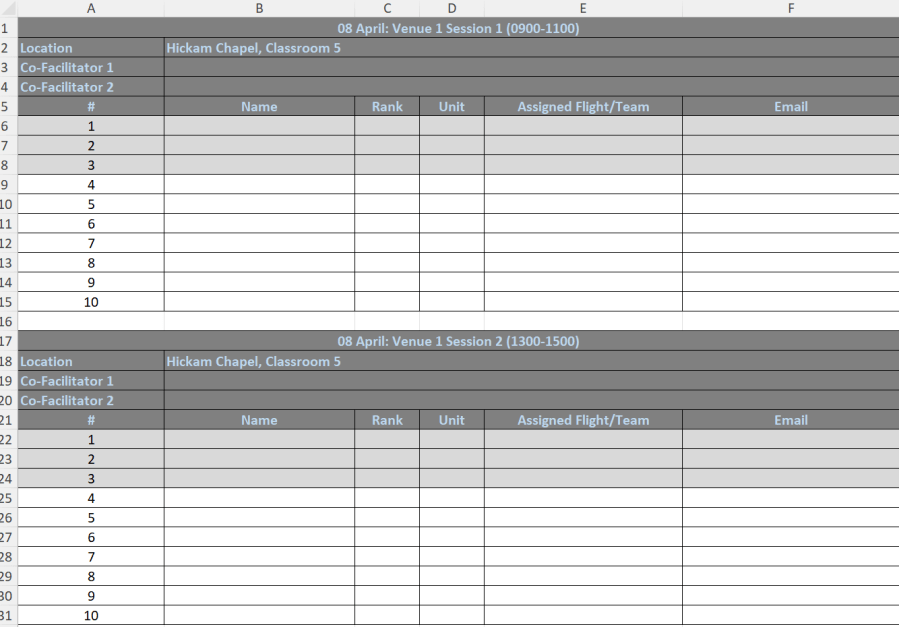
- Each session must have at least 3 and no more than 10 participants.
- Participants in each session must be from the same organization.
- Participants must be from the same workplace or team.
- Participants must be from the same rank tier or pay grade.
Sample Size Considerations
Each workplace or team must schedule enough members to meet the required statistically representative sample size. For example, if the sample size for the overall organization is 45%, then each individual workplace or team should ensure that at least 45% of its members are scheduled to attend a Culture Mapping session.
Exception to the Rule
Workplace leadership teams or members in less common rank tiers or pay grades (fewer than three in a workplace or team) should be scheduled in Culture Mapping sessions with members from the same organization but from different workplaces or teams.

Facilitator Training
Overview
Project Nomad’s Culture Mapping Facilitator training is a six-hour course that can be completed in person or remotely via Microsoft Teams. However, given our team’s limited bandwidth, we generally will not schedule the full training unless the members are getting ready to run a real-world Culture Mapping initiative.
Culture Mapping Facilitator special experience identifier (SEI)
Criteria: The member must be able to facilitate a multi-hour Culture Mapping workshop. This requires successful participation in and completion of Project Nomad’s Culture Mapping Facilitation training and having facilitated/co-facilitated at least one Culture Mapping session verified by Project Nomad. To maintain the SEI, the member must facilitate/co-facilitate at least two (2) Culture Mapping sessions annually and actively participate in an organizational culture development community of practice group. NOTE: Award and removal of the SEI must be coordinated through HAF/CVK (SSG or SI2C).
 Project Nomad